My Thoughts on ‘After Earth’

My Thoughts on After Earth

By Veronica Nkwocha

‘After Earth’ opened with scenes of a latent conflict between a father and son. We follow General Cypher Raige (Will Smith) and Kitai (Jaden Smith) into an adventure as they go on a journey from a new homeland in outer space urged on by Kitai’s mother. They plunge, a turbulent and unexpected journey to Man’s former home; an earth that looked lush and fertile, throbbing with life and hidden dangers.

It was an intensely emotional story. The helplessness a parent can feel was captured vividly; it was time, even if he was not prepared to release his treasured child into the unknown. A father unable to be the shield and provider, but still the power behind the ‘throne’ (using a futuristic communication device) as Kitai stepped out to make his mark and conquer the vast terrain that would be for them, the difference between life and death.

There were many heart stopping moments, was he equipped for the journey? Would he remember the most important lesson of all; to not fear? And the moments when the father has to look away from the images of his son when it seemed all would be lost.

The cinematography was crisp; one could almost touch the plants as the trembled in the silent breeze, the snowflakes drifted carefully as though they knew that rest would be their sure demise. The enemy alien was large, raged with a vengeance and frothed with hate for Man. The fallen eagle was majestic and called out a silent message that a kindred soul can be found in the most unusual of places.

A father and a son; the time together became a time apart and in all of the separation, they found a bond, tied into unbroken cords of love, respect and faith for tomorrow.

‘After Earth’ has had its share of criticism, The Hollywood News describes it;

The clatter and booms from the doomed spacecraft in the first scene propel the film into top gear and will initially have you in awe, but it cannot escape the shifting down of gears as the film progresses from there on in. The special effects, as expected, are second to none and throughout the opening few scenes are faultless. But they become a tad laughable as we journey through to a set piece set around a waterfall two-thirds in.”

The Wall Street Journal notices a Scientology tint;

I’ve never seen a movie that moves so slowly, or takes itself so seriously, which is why it doesn’t seem like a movie at all, but a sermon whose central subject is fear: “Danger is real,” the father tells the son, “but fear is a choice.” So a right question might be why “After Earth” was made. The sermon echoes a central theme of Scientology.”

The expectation from the beginning was that it would be a movie of a battle to survive against a back drop of a separation from home. In that regard, it got its job done although it did carry on to the point of being slightly tedious in parts.

There weren’t many moments of hope or laughter but there was an abundance of a relentless fear for the marooned duo. I wish there were more scenes showing a humorous side like the scene where Kitai kept running even after there were no more baboons in sight. His father said something like ‘son, you’re running away from nothing’ and the cinema erupted in laughter. It would have added more colour to the dark of ‘After Earth’.

Dawn Tryst (Poetry)

English: Trees, mist, and sun. The Blair, Auch...

English: Trees, mist, and sun. The Blair, Auchentiber, Ayrshire Looking south behind the Blair. (Photo credit: Wikipedia)

Dawn Tryst

By Veronica Nkwocha

Cast your eyes to the Sun
Gently unfurling
Rising from the cusp
Of inky dark
Marking its presence
With a soft morning light
Casting its shadows in cloudy sighs
A shower of blessing
Trickling through a veil
Of its flickering light

*Image from here: Attribution Donald MacDonald (File licensed under Creative Commons Attibution-Share Alike 2.0 Generic license. 

Palace of Secrets (Poetry)

image

Palace of Secrets

By Veronica Nkwocha

Whispers, in the palace of secrets
Soft footsteps, in the treasured garden
Draped in a garland of pretty blossoms
Garnished with hidden sins

Put on the cherished veil of outstanding beauty
Dance on the front steps, preening and perfect
Trapped in a river flowing,
Tremors from a thinning crust
The guardian quivered, pluck the secret bow
Shoot darts of keys to unlock the box

Crumpling muddied veil and splattered tears
On a shattered vial of crippling pain
Dying blossoms gripping a fallow garden
Silence in the palace of secrets

My Thoughts on ‘The Whispering Trees’ by Abubakar Adam Ibrahim

This is one of five posts on the Caine Prize for African Writing 2013 Shortlist. A group as organised by Aaron Bady will be blogging about the entries (one per week) for five weeks until the prize is announced on the 8th of July. Please see the links below for details and a schedule.

My Thoughts on ‘The Whispering Trees’ by Abubakar Adam Ibrahim

By Veronica Nkwocha

The story opens with a tragedy; the protagonist is involved in an accident and loses his beloved mother. He is at first protected from this knowledge having lost consciousness for a period until he finds himself in hospital.

The Whispering Trees’ happened in stages; as though they were five stories woven into one. The ‘Accident’, where the faint moments when he merged almost seamlessly with the other world is described in lyrical language. It carried on to the ‘Awareness’ (of his blindness and the knowledge of his permanent separation from Ummi); the ‘Anger’, (during which saint Faulata lifted the heavy load). The ‘Limbo’ (where the malam had to carry out a ritual) and then the ‘Awakening’ into a quasi-heaven much longed for at the start of the story.

The bruising of Salim’s soul from the moments of the accident was instant and it never got better. Apart from the brief period when he tried; studying braille, weaving baskets and waiting for Faulata. His pain was described in detail taking over more than half of the story. It didn’t detract from the essence because one comes away with a deep understanding of how much his loss impacted him. (Some questions linger; in reality would Salim’s schooling end with just one month to graduating from Medical school?)

The second bruising where Faulata left him to marry someone else sheared off the scab of the wound and pierced another knife. This time, he did not lose consciousness as with the accident but appeared to enter into a trance; as though the first unconsciousness was a twin of this new disappearance from life. It was near identical, like looking in a mirror; the first, a precursor and tangential (more…)

Fragrant Gems (Poetry)

image

Fragrant Gems

By Veronica Nkwocha

Close your eyes
Feel the tenderness of the fleeting breeze
Follow the trail of the moonbeam
Stand mesmerised by the shadow of a swaying tree,
by the silver of a streaking star
Draw from the well of the fragrance of an orchid
Stay lost in the breath-taking beauty of a rose bed
Dance enthralled by the charm of the robin’s song,
by the trickle of the stream trailing over rocks on its merry way
Drink from the coolness of a spring on a hot day
Fill your cup with Life
Drink it up
Lay
Satiated in fuzzy meadows
Intoxicated by the feast
Life freely gives

Pool1

A Tale of the Unexpected (Okene Harrison- Underwater Sailor)

North and South Atlantic Ocean

North and South Atlantic Ocean (Photo credit: Wikipedia)

Tale of the Unexpected – Womb of Despair 

By Veronica Nkwocha

*Update

The unborn child growing, tranquil and awaiting its birth has no concept of fear. It is in the perfect home designed especially for his needs. A cocoon of love and nurture, very different from the ‘womb of dread’ Okene Harrison found himself in.

On the 26th of May, the tugboat he had been working in along with 11 others in the Atlantic Ocean had just capsized, and he was trapped alone in a pocket of air just 1.5m by 3m. Its wreckage 30ft underwater.

“The 470-tonne boat was towing an oil tanker for oil giant Chevron when it went down 20 miles off the Escravos region of the Nigerian coast.”

Would he be rescued? How long would his stay last? Would the air be sufficient to keep him alive?

As with a birth, he wouldn’t perpetually reside in his new home. The end of his ordeal would have been something he wanted but dreaded at the same time, it could go either way.

He was rescued sixty hours later but lost his colleagues. His rescuers have been praised for their bravery. A delicate effort as his body had normalised to the pressure underwater.

According to US Navy Salvage Officer Patrick Keenan “After spending two days at 30 meters of depth, he had become saturated, meaning his body had absorbed all the pressurized gases and equalized with the surrounding water pressure. Bringing him to surface from that depth, and after having been saturated at 3 or 4 atmospheres, could easily have killed him.”

I found the story of his rescue very hear warming and tinged with sadness for those who lost loved ones. I can imagine the intricate nature of the ‘birthing’ of Okene Harrison, every care taken to ensure one of life’s happy endings.

*Update: Here’s are links to interviews with Mr. Harrison:

I was there in the water in total darkness just thinking it’s the end. I kept thinking the water was going to fill up the room but it did not,” Okene said” http://www.reuters.com/article/2013/06/12/nigeria-shipwreck-idUSL5N0EO20320130612

“… I was the one who touched the diver, I touched his head and he was shocked. He was searching and I just saw the light, so I jumped into the water. As he was shocked, he stretched out his hands. I touched him.” http://thenationonlineng.net/new/news/the-untold-story-of-chevron-boat-mishap/

“They told me all the others had died and I cried because I thought I was the only one who had been trapped in the boat”, his voice cracking. Despite suffering from nightmares and peeling skin, daily helpings of his favourite banga soup dish – a fish and palm fruit soup – have helped him feel much better, he said. He is planning to write a book on his experience.” http://africansweetheart.blogspot.co.uk/2013/06/sailor-harrison-okene-describes-his.html#.UbmUGfnVCn8

My Poem ‘Rebirth’ and the Poetry Assessor

English: The Poem Tree, Wittenham Clumps, Oxfo...

English: The Poem Tree, Wittenham Clumps, Oxfordshire. Photograph by Jonathan Bowen. (Photo credit: Wikipedia)

I tried an app today on http://www.poetryassessor.com/poetry/

According to them, it “is designed to determine whether a poem has the characteristics of a professional poem or, alternatively, an amateur poem.”

I tested it using my poem below:

Rebirth‘ by Veronica Nkwocha

A dried branch,
tinder for fire
life ebbs
feeding the soil
A budding flower
A shrub of green
trembling with life
in the morning light

*It returned a score of 4.582! So I’m well pleased lol.

P.s. I’ve tried a few others and some haven’t done so well!

Positive scores indicate that a poem has characteristics of a professional poem while negative scores indicate that the poem has the characteristics of an amateur poem.”

*Caveat, I know nothing about the creators or the suitability of the application neither was I asked by them to test it.

*Update: There’s an update on the site ” it should be noted that the average word count of the poems used in the sample used to calibrate the system was 156 (maximum 378, minimum 21, St Dev 77). This means that results for poems of less than approximately 80 words should be interpreted with caution.”

Transforming Your Corner of the Globe

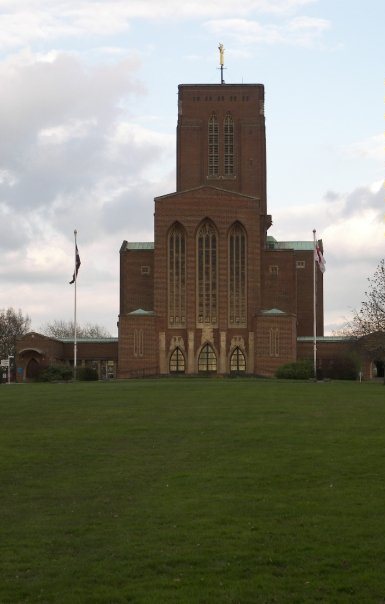
Guildford Cathedral 1

Transforming Your Corner of the Globe 

By Veronica Nkwocha

A tall order; to literally transform the world into the thing of beauty most of us dream it to be in our hearts. Half the time, one despairs about the many problems and the difficulties in matching them to much needed solutions. The genius is in finding creative answers that will cause a child to walk lighter of the burden of being born into poverty, a mother to actually live through childbirth, access to advice on rights and obligations, medicine, food, water, safe shelters or for books that will light up the eyes of a curious child and the list goes on, endless.

This week, 1-7 June, 2013 is ‘Volunteers Week’ in England. Here’s an excerpt and a link from ‘Volunteering England

Every year, over 20 million people across England and the UK volunteer, donating more than 100 million hours to their communities every week. It has been estimated that the economic value of this activity is worth in excess of £40 billion to our economy. Services and initiatives that are vital to the running of our country simply wouldn’t exist if it wasn’t for volunteers”.

It would be impossible to access much of the needed expertise and care were it not for individuals donating their time  for causes dear to them. There are other benefits to volunteering; it is a ready source for those seeking work experience, it builds community cohesion and creates time tested channels for efficient solutions to some of the many socio-economic problems that would otherwise carry on unabated.

A robust culture of volunteering can help get us a step closer to seeing the world we dream about. It may not create the painting of our dreams but it would be a vital imprint on that blank canvass, every colour a worthy step towards creating that masterpiece.

My Thoughts on ‘Foreign Aid’ by Pede Hollist

*This is one of five posts on the Caine Prize for African Writing 2013 Shortlist. A group as organised by Aaron Bady will be blogging about the entries (one per week) for five weeks until the prize is announced on the 8th of July. Please see the links below for details and a schedule.

My Thoughts on ‘Foreign Aid’ by Pede Hollist 

By Veronica Nkwocha

The story ‘Foreign Aid’ is about fissures caused by the uprooting of the principal character Balogun from Sierra Leone to America. The chasm widens with his long sojourn in his new home away from his roots where he had lived up until his mid-twenties.

The man we meet in America is one of many people, one of a crowd. We learn about his stay in a few paragraphs; he was generic, unobtrusive and inconsequential. The twenty years passed in a blur of the many things people like him did; coloured phone cards to call home, failed promises to his loved ones at home and furtive marriages for the all-important green card.

He “..submerged himself in inner-city America. He flipped burgers, cleaned office buildings, and worked security for cantankerous residents in a variety of elder-care facilities—pursuing the American dream, unskilled, undocumented, and with an accent…

Even though life got in the way of his dreams, he still found his level like waters after escaping their hold. He didn’t get the Economics degree but he became documented, had a job and was driven in his goal to survive the ever changing urban jungle he had found himself in.

Balogun spoke clipped and fustian; adapting his language to a degree, to that of his inner city surroundings. A (more…)